Teaching Spelling
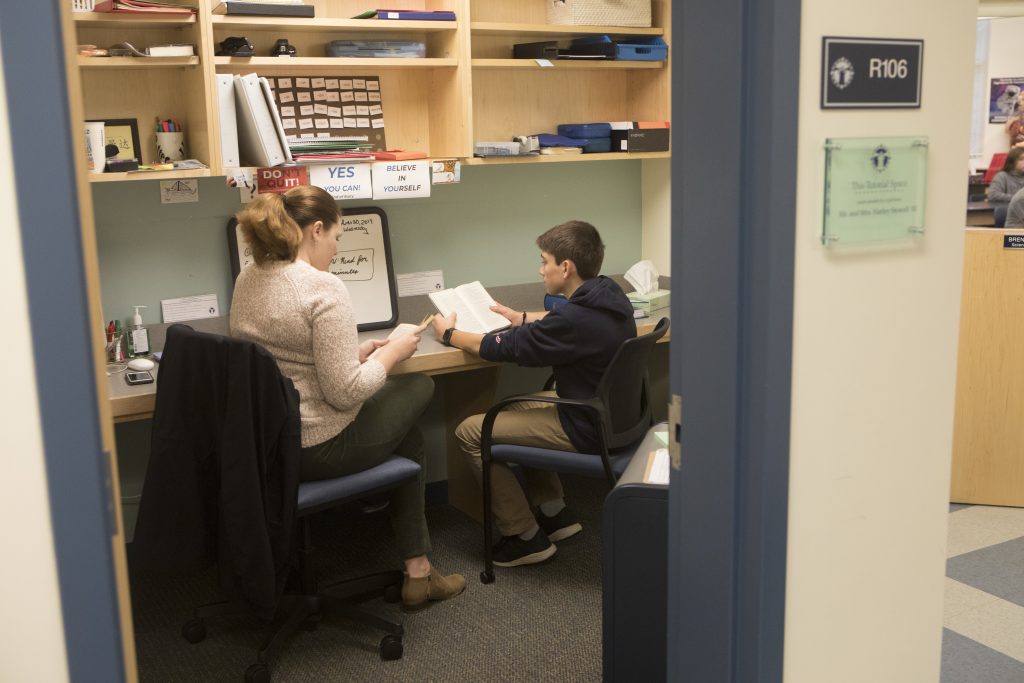
I began teaching spelling in one-on-one tutorials with students back in 2013 after training in the Orton-Gillingham approach. At the time, I remember thinking, “Why did no one teach me these spelling rules when I was a student?” In fact, the main spelling strategy I remember learning in school was courtesy of a fellow 5th-grade student who told me that to spell friend, I needed to think of the word as “fry” and “end.” (This is still how I remember the spelling of friend to this day).
Spelling words can be challenging, and it can also be daunting to teach. As Linnea Ehri (2024) explains, “In English, there are alternative ways that sounds are spelled, and this variability makes it more difficult to produce perfect spellings of words” (p. 5). For example, there are multiple ways to spell the /ō/ sound, including o, o-e, oa, ow, and oe, but no hard and fast rule for which pattern should be used in a specific word. Thus, if I teach a student that oa says /o/, they will be able to read words like boat, coat, and loan; however, they will not necessarily spell “boat” as boat as opposed to bote or boet.
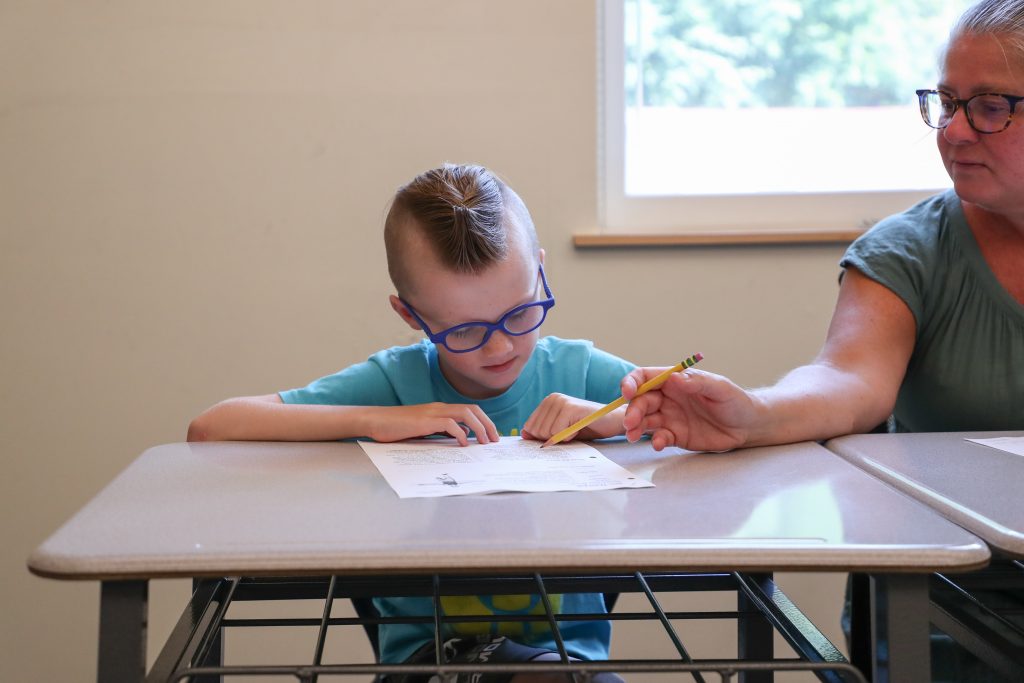
Despite its complexity, spelling can absolutely be taught in the explicit, systematic, data-driven way that we associate with high-quality literacy instruction. While there isn’t a one-size-fits-all lesson plan that will work perfectly for every student, here are a few of the steps and strategies that I use when creating individualized spelling lessons:
Warm-Up
Starting with a quick warm-up activity can be a great way to set the stage for the rest of your lesson. Typically, I have students complete a listening activity targeting either phonemic awareness or morphological awareness (i.e., awareness of meaningful word parts such as prefixes and suffixes), both of which are important underlying skills for spelling and word reading.
Letter-Sounds
Next, I think about the individual sound-letter correspondences that students are working on and provide practice at this basic level. For example, if a student is going to be reviewing digraphs (e.g., sh, ch, th, ck) during the lesson, I may say each sound aloud, ask the student to write the corresponding letters, and then have them build words using letter tiles that include these digraphs.
Introduce/Review New Concept
Reading and spelling are highly interrelated skills, and therefore, even when my primary focus is spelling, word reading is frequently a part of my lessons. When introducing a new spelling pattern or concept, I often provide students with lists of words containing the target pattern. Or, I might give them a set of word cards to sort as a way to “discover,” for example, that words with the /k/ sound are spelled in various ways depending on the location of /k/ within the word (e.g., cup vs. sock vs. mark vs. bake).
Word Spelling/Review and Practice
Dictation lists are always at the heart of my spelling lessons, since this tool provides students with opportunities to practice spelling isolated words. However, this is also the part of the lesson that my students frequently find the most tedious. So, I try to turn the spelling work into a game whenever possible. For instance, I might ask a student to spell dictated words in 9 spots of a tic-tac-toe grid before playing a round of tic-tac-toe. (Note that I typically ask the student to read all of the words that they spelled, even on my turn). I also like using a connect 4 game for spelling practice.
Heart Words
Students who struggle with spelling frequently make mistakes with irregular words, or words that do not follow regular phonics patterns. Even common words like was, said, or again can be challenging. During this step in the lesson, I work with students to identify the part(s) of the word that “play by the rules” as well as the part(s) that one must learn “by heart” (Moats & Tolman, 2019, p. 213). Some examples of heart words can be found here. Subsequently, I provide students with opportunities to practice spelling these words in short activities (e.g., listening to a sentence and writing down which “heart” word they hear).
Sentence Level
Next, I increase the task complexity by having students apply their spelling knowledge in sentences. For some students, particularly those working at a one-syllable word level, I dictate sentences that include the lesson’s target spelling patterns and/or heart words. For other students, such as those who are working on sentence-level grammar, I may ask them to craft their own sentence using a word they spelled previously (e.g., “Write a compound sentence that includes two nouns from your spelling list.”). Sentence-level work is also a great opportunity to have students practice applying an editing strategy (e.g., CAPS: Capitalization, All my words, Punctuation, Spelling).
Connected Text Writing
For students ready to work at the paragraph level (or beyond), this last part of the lesson can help students generalize the spelling skills they have learned to a practical context. In my own work, this activity has taken many different forms depending on a student’s needs. For students who enjoy creative writing, I have sometimes asked them to use specific heart words or words with taught spelling patterns to craft an original story. Other students have brought writing assignments from other classes to our lessons, and I have used this as an opportunity to provide structured practice in identifying taught spelling patterns, correcting spelling mistakes, and fixing other mechanical errors (i.e., capitals, punctuation) in context. These tasks support the ultimate goal of this instruction: to make spelling easier and less effortful, such that students can focus on the ideas and craft of writing, where their unique voices can shine through.
References
Ehri, L.C. (2024 January/February). Clarifying the role of orthographic mapping in sight word reading. The Reading League Journal, 5(1), 4-12.
Moats, L.C., & Tolman, C. A. (2019). Language essentials for teachers of reading and spelling (LETRS): Volume 1, Units 1-4 (3rd ed), Voyager Sopris Learning.
UFLI Foundations. (2022). Printable cards for irregular “heart” words. University of Florida Literacy Institute. https://ufli.education.ufl.edu/wp-content/uploads/2022/09/UFLI_Heart_Word_Printable_Cards.pdf